
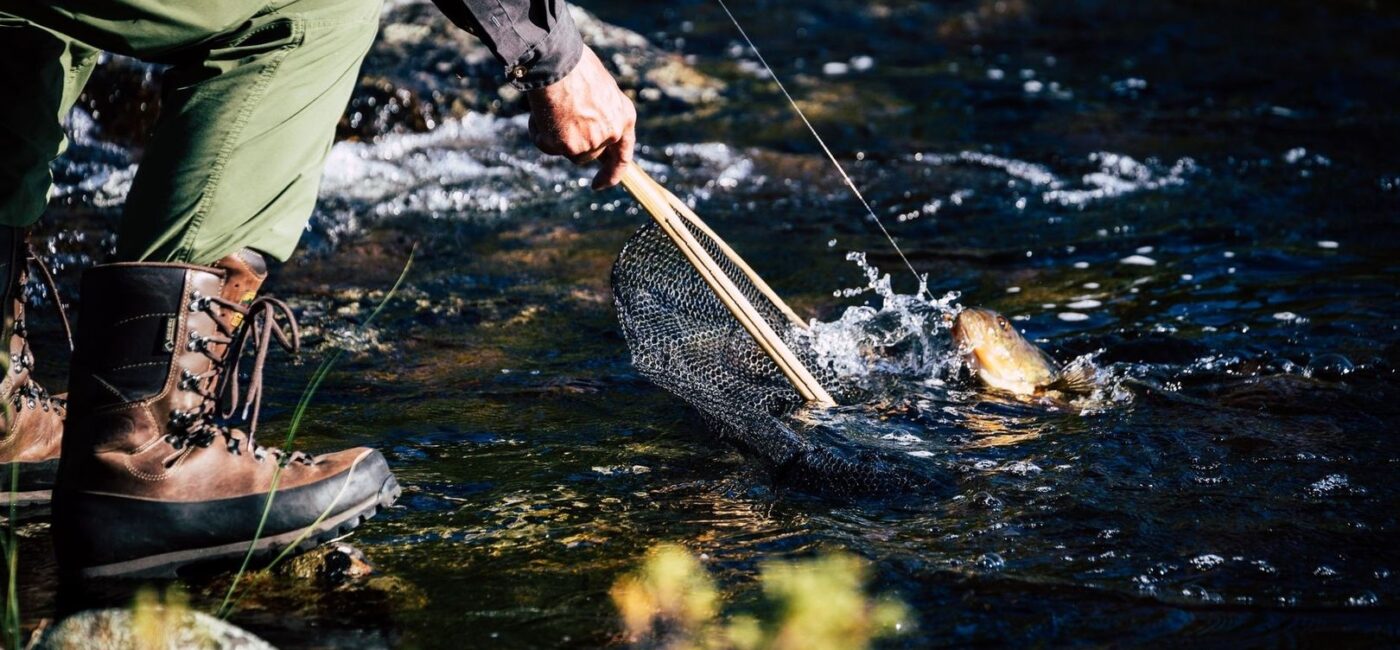
The Living Beat of the River Nith
The River Nith is a river of long character and changing temperament, shaped by upland rainfall, agricultural country, wooded banks and the tidal influence around its lower reaches. Its salmon and sea trout runs give the river its seasonal rhythm. Spring fish may meet cool, clear flows and strong currents, while autumn fish often arrive after spates, carrying the urgency of the spawning season. Every pool, glide and gravelly tail offers more than a chance of sport. It is part of a migration route on which the survival of each fish matters.
Catch and release has therefore moved well beyond being a matter of personal preference. For vulnerable migratory stocks, it is an essential act of stewardship. The modern angler must recognise that a fish swimming away is not automatically a fish that will survive. Exhaustion, acidosis, damaged scales, hook wounds and prolonged exposure to warm air can continue to affect a salmon or sea trout after it disappears into the current. Statutory conservation measures reinforce the responsibility carried by anglers; an Authoritative Source also urges anglers to catch and release salmon. Under the Scottish Government”s salmon conservation regulations, the River Nith is classified as a Category 3 system, making 100% catch and release of Atlantic salmon a statutory legal requirement overseen locally by the Nith District Salmon Fishery Board. True release begins before the cast and ends only when the fish is fully recovered.
Understanding Water Temperature and the Critical 18-Degree Threshold
Water temperature governs far more than comfort on a summer day. As river water warms, its capacity to hold dissolved oxygen falls, while the metabolic demands of a salmon or sea trout rise. A fish already using energy to migrate, escape the line and maintain position in a spate is placed under increasing physiological pressure when the water is warm. Fast water may look well oxygenated, but turbulence alone does not remove the effects of high temperature, particularly when a fish has been exercised hard.
During a prolonged fight, salmonids rely increasingly on anaerobic metabolism. This produces lactic acid, which contributes to muscle fatigue and can disturb normal blood chemistry. Warm water compounds the problem by increasing metabolic demand, reducing oxygen affinity in the blood and slowing recovery. Research into thermal stress and post-exercise recovery shows why a fish that appears strong at release may still be seriously compromised. The documented physiological evidence on Atlantic salmonids is set out in Checking your browser and in research on thermal stress and post-exercise survival, which is essential reading for anyone making release decisions in marginal conditions.
| Water temperature | Sensible angling decision |
|---|---|
| Below 12°C | Generally favourable for active angling, provided the fish is handled quickly and released correctly. |
| 12°C to 15°C | Continue with care. Use strong tackle, shorten the fight and keep the fish submerged during unhooking. |
| 15°C to 18°C | Exercise increasing restraint. Avoid unnecessary photography, monitor recovery closely and follow beat-specific guidance. |
| 18°C and above | Do not deliberately angle for salmon or sea trout. Severe thermal and exercise stress can make post-release mortality unacceptable. |
The 18-degree threshold should be treated as a firm warning rather than a target at which experimentation is acceptable. A shaded thermometer reading may not represent conditions in every pool, and shallow margins can warm more quickly than the main current. Check the temperature before fishing, after a major change in weather and whenever the river appears unusually low or sluggish. If the reading is near the threshold, the responsible decision is to stop rather than hope that a brief fight will have no lasting consequence.
Subsurface Fish Care and the Danger of Gravity
A salmon is supported by water in a way that cannot be replicated on the bank. Its body, organs and spine are adapted to neutral buoyancy, with the surrounding water supporting the weight and allowing the fish to maintain balance with comparatively little effort. Once lifted horizontally by the tail or held vertically by the head, the distribution of force changes abruptly. Internal structures are placed under strain, the spine can flex unnaturally and the fish may thrash in an attempt to regain support.
Air exposure creates a second set of problems. Gills designed for continuous contact with water begin to dry, delicate filaments can adhere together and the protective mucus layer can be disturbed by hands, clothing and rough mesh. Even a short bank-side photograph adds avoidable stress. The safest routine is to keep the fish in a deep, knotless net or submerged cradle while the hook is removed. If a photograph is genuinely required and local rules permit it, prepare the camera first, keep the fish just above the water for only a moment and return it immediately.
- Wet hands before touching the fish, and avoid squeezing the belly or gripping the gill covers.
- Keep the fish submerged while assessing the hook and use forceps or long-nosed pliers for a quick, controlled removal.
- Do not drag a fish over gravel, grass, stones or a dry net.
- If the hook is deeply embedded in the throat, gill area or internal tissues, cutting the leader may cause less damage than forcing removal.
- Release the fish promptly, even if that means giving up a photograph or measuring session.
Step-by-Step Field Recovery in Laminar Flow
Recovery should take place in water that supports the fish without battering it. Look for a steady glide or gentle pocket water with sufficient depth for the salmon to balance naturally. Avoid turbulent froth, strong hydraulic boils and stagnant margins. White water can force a weakened fish to spend energy merely holding position, while slack water may contain insufficient oxygen exchange. A quiet, continuous current is usually the best compromise.
The fish should face upstream, allowing water to pass naturally over the gills. It should not be pushed through the river, swung from side to side or repeatedly moved backwards and forwards. That familiar pumping motion is often intended to force water through the gills, but it can damage delicate gill lamellae and adds unnecessary handling. Proper recovery is patient and controlled. The current does the work while the angler provides support.
- Move to suitable holding water before removing the fish from the net, keeping the net submerged wherever possible.
- Support the fish with one hand beneath the pectoral region and the other around the narrow wrist of the tail, without squeezing either area.
- Hold the fish facing gently upstream, keeping its head submerged and its body aligned with the current.
- Maintain a stable position and allow the fish to ventilate its gills naturally. Do not pump it backwards and forwards.
- Watch for deliberate tail movement, a level body, controlled breathing and the ability to hold position without your support.
- Open your hands gradually and let the fish leave under its own power. Do not push it into faster water.
Readiness is shown by behaviour rather than by a fixed number of seconds. A recovered fish will usually begin to resist the supporting hands, hold itself upright and make purposeful movements with the tail. A fish that rolls, lies on its side, breathes erratically or drifts when released is not ready. Continue support in suitable current, or move it carefully to slightly quieter water if the first position is too powerful. If recovery remains poor, alert the beat manager or ghillie, particularly when the fish has been caught in warm conditions or has suffered a deep hook injury.
Essential Tackle Choices for Low-Impact Sport
Tackle should be selected not only for the pleasure of casting but also for the speed and control of the release. Single barbless hooks are often the simplest low-impact option, while double barbless patterns may be appropriate where permitted by fishery rules. Trebles create more points of contact, increase the chance of awkward entanglement and can lengthen unhooking time. Hook regulations vary between beats and seasons, so current local conditions must always be checked before fishing.
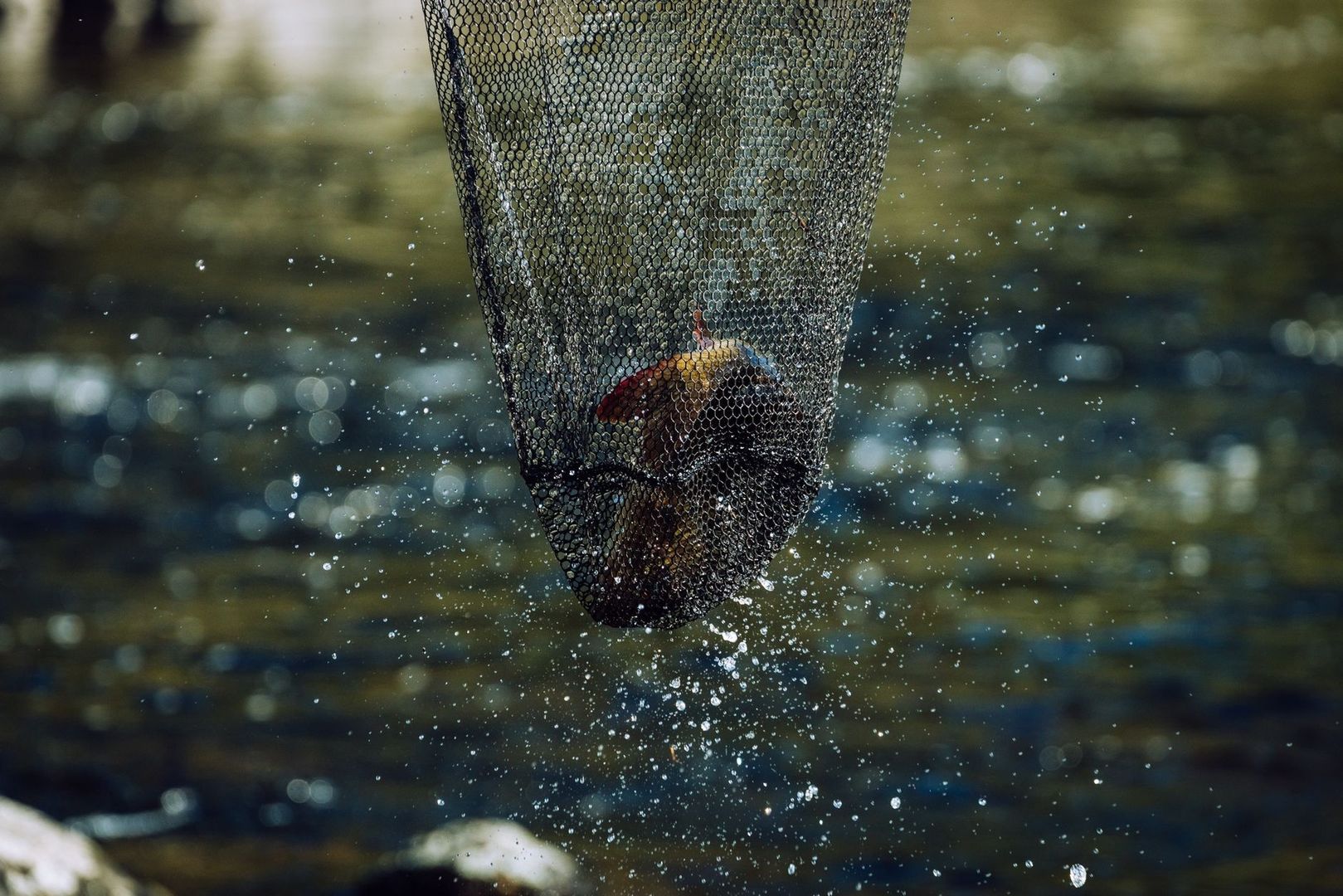
Leader strength deserves equal attention. Overly light tackle extends the fight, allowing exhaustion and acidosis to build. A sensible breaking strain lets the angler apply firm, progressive pressure and bring the fish to the net before it is spent. Knotless mesh, especially soft rubber-coated or similarly fish-friendly material, is preferable to coarse knotted nylon because it reduces abrasion and the removal of scales and mucus. Research on landing nets has found that netting can cause fin and skin injury, with knotted meshes generally more damaging than softer knotless alternatives. No net is harmless, so the best practice remains a submerged, brief and deliberate landing.
- Use barbless hooks where rules allow, or flatten barbs carefully and check that the point remains sharp.
- Choose leader strength that matches the river, fly and likely fish, allowing a firm fight rather than prolonged exhaustion.
- Carry forceps, a line cutter, a thermometer and a large knotless rubber-coated net.
- Prepare the landing area before the fish is close, removing loose tackle and identifying safe footing.
- Check local permits, hook restrictions, seasonal rules and any beat-specific catch-and-release requirements before fishing.
Carrying True River Stewardship Forward
Successful catch and release on the Nith is a chain of small decisions. Check the temperature before casting. Stop when warm water reaches an unsafe level. Use tackle that ends the fight efficiently, land the fish in a soft knotless net and keep it submerged. Remove the hook quickly, support the body properly and recover the fish in steady current. These actions protect a salmon or sea trout long enough for it to continue upstream, spawn successfully on suitable gravels and contribute to the next generation.
That responsibility is shared across the fishery. Beat owners and managers set sensible rules and monitor conditions. Ghillies explain local water, access, safe wading and appropriate methods. Visiting anglers bring the discipline to follow those instructions, accept that some days are unsuitable and measure success by the quality of the release rather than the photograph or tally. River stewardship extends beyond a single fish and a single season. It is the continuing agreement between people and water that keeps the Nith a living river for migratory fish and responsible anglers alike.